There’s nothing more frustrating than opening your fridge and realizing the milk is warm, the vegetables are wilting, and everything inside feels… room temperature. A refrigerator not cooling is one of the most urgent appliance problems a household can face, because unlike a broken dryer or a slow-draining washing machine, this issue puts your food safety at risk almost immediately.
The good news is that a refrigerator not cooling doesn’t always mean it’s time to shop for a new one. In most cases, the cause is something specific and repairable — and in this guide, we’ll walk you through the seven most common reasons your refrigerator has stopped cooling, what you can safely check yourself, and exactly when it’s time to call in a professional.
If you’re already dealing with a warm fridge right now, don’t wait — Appliances Fix Abu Dhabi offers same-day refrigerator repair in Abu Dhabi, with technicians who diagnose the exact issue on-site and carry genuine parts for most major brands.
Why Does a Refrigerator Stop Cooling So Suddenly?
A refrigerator relies on several components working together in perfect sync — the compressor, condenser coils, evaporator fan, thermostat, and door seals — to keep a constant, stable internal temperature. When even one of these parts fails or gets dirty, the entire cooling cycle can be disrupted, sometimes gradually and sometimes overnight.
Understanding which part is misbehaving is the first step to fixing the problem quickly, before your food spoils and the strain on the compressor causes a much bigger (and more expensive) breakdown.
7 Common Reasons Your Refrigerator Is Not Cooling
1. Dirty or Blocked Condenser Coils
The condenser coils, usually located at the back or underneath the refrigerator, release heat as part of the cooling cycle. Over time, dust, pet hair, and grime build up on these coils, trapping heat inside and forcing the compressor to work harder — often failing to cool properly as a result.
Signs: The fridge runs constantly, feels warm to the touch on the back panel, and cooling is inconsistent.
2. Faulty Door Seals (Gaskets)
If the rubber gasket around your refrigerator or freezer door is cracked, loose, or coated in food residue, cold air escapes continuously and warm air seeps in. This forces the compressor to run non-stop, yet the fridge still won’t reach the correct temperature.
Signs: Condensation inside the fridge, a door that doesn’t feel like it “seals” when closed, or visible gaps around the gasket.
3. Malfunctioning Thermostat
The thermostat regulates the internal temperature by signaling the compressor when to turn on and off. A faulty thermostat may fail to detect that the fridge is too warm, meaning the cooling system simply never kicks in.
Signs: Inconsistent temperatures — some areas of the fridge are cold while others stay warm.
4. Broken Evaporator Fan
The evaporator fan circulates cold air from the freezer throughout the refrigerator compartment. If this fan motor fails or gets obstructed by ice buildup, cold air stops circulating properly, and the fridge section warms up even if the freezer still feels cold.
Signs: Freezer works fine, but the fridge section is warm — often accompanied by a buzzing or rattling noise.
5. Compressor Issues
The compressor is essentially the heart of your refrigerator’s cooling system. If it fails, becomes overworked, or loses refrigerant pressure, the entire cooling process stops. Compressor problems are among the most serious refrigerator faults and almost always require a professional technician.
Signs: A loud humming or clicking sound from the back of the fridge, or the compressor cycling on and off rapidly without cooling.
6. Low or Leaking Refrigerant
Refrigerant is the chemical that absorbs and releases heat to keep your fridge cold. A leak — often caused by a small crack in the sealed system — leads to a slow, gradual loss of cooling performance over days or weeks rather than a sudden stop.
Signs: Cooling gets progressively worse over time, sometimes with a faint chemical smell near the back panel.
7. Overloading or Blocked Air Vents
Packing your refrigerator too full — or blocking the internal air vents with large containers — restricts proper air circulation. Even a perfectly healthy refrigerator will struggle to maintain temperature if cold air can’t flow freely between compartments.
Signs: Cooling issues appear only after grocery shopping or when the fridge is unusually full.
Quick DIY Checks Before You Call a Technician
Some of these steps can be done safely by any homeowner and may resolve the issue immediately:
Check 1: Clean the Condenser Coils
Unplug the fridge, pull it away from the wall, and gently vacuum or brush off dust and debris from the coils at the back or bottom. Do this every 6 months for best performance.
Check 2: Inspect the Door Seals
Close the door on a piece of paper — if you can pull the paper out easily, the seal isn’t gripping properly and may need cleaning or replacement.
Check 3: Verify the Thermostat Setting
Sometimes the fix is as simple as someone accidentally bumping the temperature dial. Set it to the manufacturer’s recommended level (usually between 1–4°C for the fridge compartment) and wait 24 hours before assuming it’s faulty.
Check 4: Listen for the Evaporator Fan
Open the freezer and listen for a fan running. Silence, combined with a warm fridge section, usually points to a fan motor issue or ice blockage.
Check 5: Reduce Overloading
Remove a few items, especially anything blocking the internal air vents, and give the fridge a few hours to stabilize before checking the temperature again.
Check 6: Check the Power Supply and Settings
Confirm the fridge is properly plugged in, the outlet is working, and that no “vacation” or “energy saver” mode has been accidentally activated.
When to Call a Professional Technician
While cleaning coils or checking door seals is safe DIY territory, the following issues require an experienced technician:
- Compressor replacement or diagnosis
- Refrigerant leaks or recharging (this involves handling regulated refrigerant gases and should never be attempted without certification)
- Evaporator fan motor replacement
- Thermostat or control board replacement
- Persistent cooling issues after trying all DIY checks
- Unusual smells, sparking, or electrical faults
Attempting compressor or refrigerant repairs yourself isn’t just risky — in many regions it’s also against environmental handling regulations, since refrigerants must be recovered and disposed of properly (you can read more about safe refrigerant handling from the U.S. EPA’s guidance on refrigerant management).
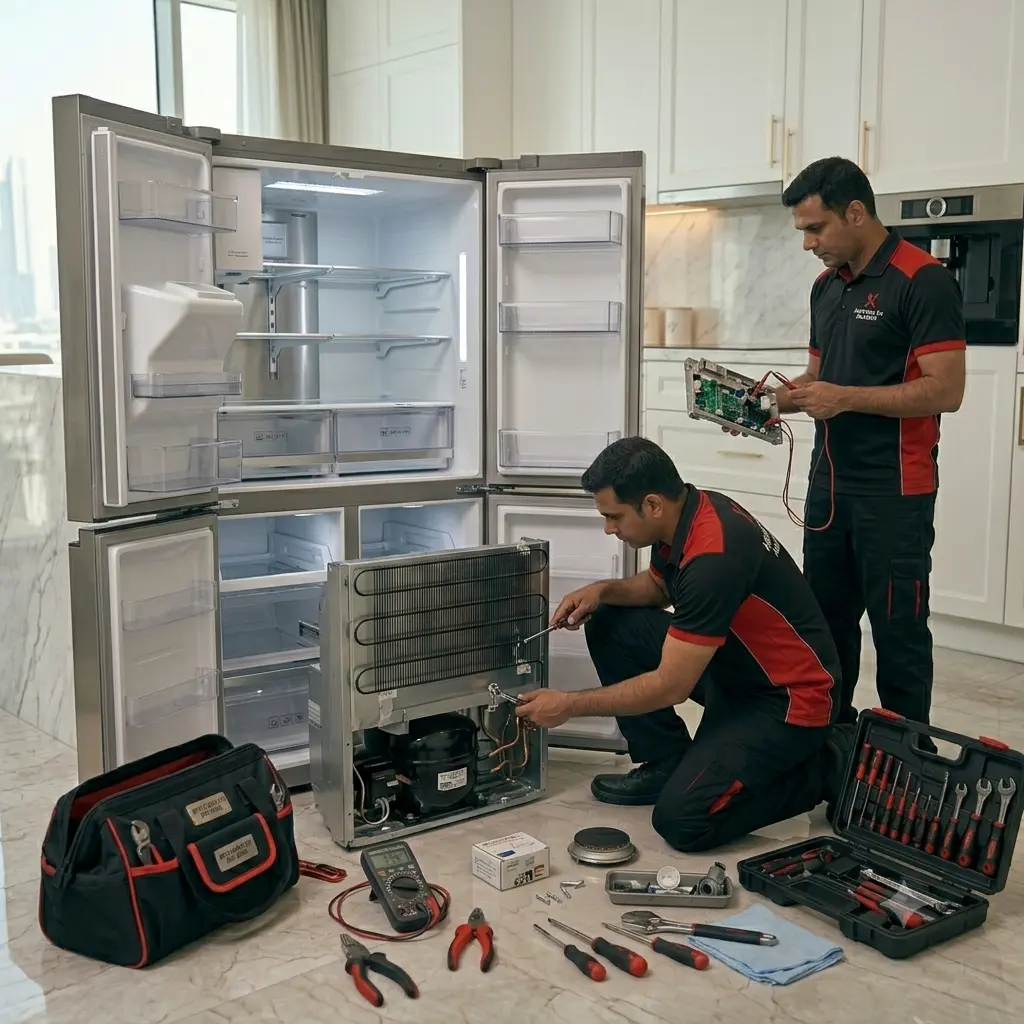
Our certified technicians at Appliances Fix Abu Dhabi handle exactly these kinds of repairs daily, with the right tools, genuine parts, and training to get your refrigerator back to full cooling performance — often in a single visit.
How to Prevent Refrigerator Cooling Problems
A little consistent care significantly reduces the chances of your refrigerator failing unexpectedly:
- Clean condenser coils every 6 months to prevent overheating and compressor strain
- Check door seals regularly and clean them with warm soapy water to maintain a tight seal
- Avoid overloading the fridge, and never block internal air vents
- Keep the fridge away from direct sunlight or heat sources like ovens and stoves
- Don’t set the temperature colder than necessary — this overworks the compressor without added benefit
- Schedule annual professional maintenance to catch early signs of compressor or fan wear
For more ways proactive care saves you money long-term, take a look at our related article: Why Regular Appliance Maintenance Saves You Money.
Areas We Cover in Abu Dhabi
Appliances Fix Abu Dhabi provides same-day refrigerator repair across the city and surrounding communities, including:
- Al Khubeirah
- Al Markaziyah
- Al Manhal
- Al Nahyan
- Al Rowdah
- Al Marina
- Al Qurm
- Al Tibbiya
- Danet Abu Dhabi
- Madinat Zayed
- Zayed City
- Sas Al Nakhl
- Al Samha
- Al Wathba
- Eastern Mangrove
Not on this list? We likely still cover your area — contact us to confirm availability and book a technician.
We also repair other major home appliances, including washing machines, dryers, dishwashers, ovens and cookers, and small appliances. You can also read more troubleshooting guides like Washing Machine Not Draining Water? Common Causes & Fixes on our blog.
Frequently Asked Questions (FAQ)
Q1: Why is my refrigerator not cooling but the freezer still works?
This usually points to a blocked evaporator fan or restricted airflow between the freezer and fridge compartments, preventing cold air from circulating into the main fridge section.
Q2: How long can food stay safe if the refrigerator is not cooling?
Perishable food is generally considered safe for up to 4 hours at room temperature. If your refrigerator has been warm for longer, it’s safer to discard perishable items to avoid foodborne illness.
Q3: Can a dirty condenser coil really stop a refrigerator from cooling?
Yes. Dust-covered coils trap heat and force the compressor to overwork, which can eventually cause it to stop cooling effectively or fail completely. Cleaning them every 6 months prevents this.
Q4: Is it worth repairing a refrigerator that’s not cooling, or should I replace it?
In most cases, repair is far more cost-effective than replacement — especially for issues like dirty coils, worn seals, or a faulty fan. Compressor or major sealed-system failures on very old units may be the only cases where replacement makes more financial sense, and our technicians will always advise you honestly.
Q5: Do you offer same-day refrigerator repair in Abu Dhabi?
Yes. Appliances Fix Abu Dhabi provides same-day diagnosis and repair across Abu Dhabi city and surrounding areas, with technicians carrying common spare parts to complete most repairs in a single visit.
Q6: How much does refrigerator repair cost in Abu Dhabi?
Costs depend on the exact issue — a coil cleaning or seal replacement is inexpensive, while compressor or refrigerant repairs cost more. Contact us for a free, no-obligation quote based on your fridge’s brand and model.
Final Thoughts
A refrigerator not cooling is stressful, especially with food safety on the line, but it’s rarely something that requires a full replacement. From dirty condenser coils to a worn door seal or a struggling compressor, most causes are diagnosable and fixable quickly by an experienced technician.
If your fridge isn’t cooling properly and the DIY checks above haven’t solved it, don’t take chances with spoiled food and a stressed-out compressor. Reach out to Appliances Fix Abu Dhabi today for a fast, same-day diagnosis and repair. Our technicians have helped hundreds of households across Abu Dhabi keep their kitchens running smoothly — and we’re just a call away.
📞 Book your refrigerator repair today: appliancesfixabudhabi.com
🔧 Explore more repair guides: Visit our Blog